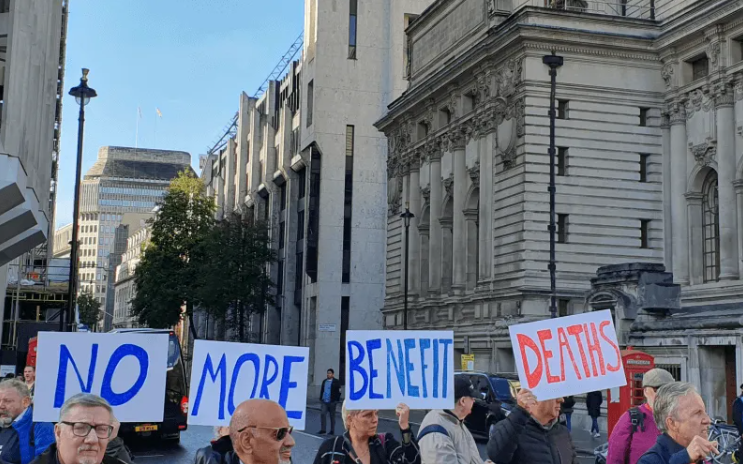
Extra costs evidence from grassroots group provides stark warning to ministers set to cut disability benefits
New research from disabled activists has shown the huge variety of ways in which mental health impairments can cause significant extra daily living costs, just as the government appears set to announce fresh cuts to disability benefits.
The grassroots, user-led mental health group Recovery in the Bin, which carried out the research, warned that they were the group of benefit claimants with “with the highest suicide and starvation rates” so any further cost-cutting of benefits would “cause more suffering and deaths”.
RITB said the evidence it had collected was a warning to ministers that “if you proceed with cuts, you will proceed with deaths”*.
The BBC reported yesterday (Wednesday) that the Treasury had “earmarked several billion pounds in draft spending cuts to welfare and other government departments”.
It is just the latest signal that chancellor Rachel Reeves is about to announce cuts to “welfare spending”, and particularly to disability benefits.
The news reports come despite evidence from the Office for Budget Responsibility that total spending on social security as a proportion of GDP** is predicted not to increase at all next year, and then to stay at the same level for the next four years, and is predicted to be lower this year than it was for every year from 2010-11 to 2015-16.
Last week, Disability News Service (DNS) also revealed how Labour and Conservative ministers sat on research for three years that linked the sharp increase in claims for disability benefits with a deterioration in disabled people’s health, an increase in the financial hardship they were facing, and their need for independence.
That report, Triggers to Claiming Personal Independence Payment, provided strong evidence to explain the need for increased spending on personal independence payment (PIP), and even called on the Department for Work and Pensions (DWP) to do more to increase awareness of PIP.
John McDonnell, the suspended Labour MP, has now tabled an early day motion in parliament that welcomes DNS’s efforts in securing the report and expresses concerns that the government “delayed publication of the report for so long” when it “provides strong evidence to explain the need for increased spending” on PIP.
RITB has now published the results of its own research that shows how those claiming benefits for mental health-related reasons have significant costs that justify them receiving extra support through universal credit, employment and support allowance, and PIP.
They had asked RITB members and followers about their mental health-related costs, because, they said, “the cost of living for people with mental illness/distress is no less pressing than the extra costs for people with physical illness or disability” and “benefits are essential to support a basic, acceptable standard of living”.
In response, they were told of costs to cover taxis, legal advice, extra cleaning products, health services not covered by the NHS, food deliveries, inflated utility bills, advocacy, therapy, cleaners and counselling.
Among those who provided evidence, one said: “Needing to throw out £15 worth of food because voices have changed or ruined it some way.”
Another said: “Wasting money on fresh food and then being too unwell to cook and buying takeaways is the big ongoing one.
“Paying for therapy so I can get therapy that doesn’t harm me.”
A third person who contributed told RITB: “I pay £120 per week to see my (incredible, life changing) autism-informed ex NHS clinical psychologist.
“It eats all of my PIP, leaves absolutely nothing, but her approach, experience and expertise has helped me more in four months than CMHT [community mental health team] has in 13 yrs.”
Another told RITB: “Stress induced psychosis spending on fixing things that don’t actually need fixing! Also heightened vulnerability to scams.”
And another said: “Extra costs because you can’t shop around, can’t access discounts, can’t remember reward cards, get sold bad deals.”
An RITB spokesperson told DNS yesterday (Wednesday): “Mental illness/distress claimants are the most stigmatised claimants, lacking support from the NHS, while professional groups exploit us as they seek power and opportunistically support government policy.
“Our costs are every bit as high as for people with physical disabilities, yet political and media gaslighting are now attempting to say many of us are not even experiencing disability distress or illness.
“We are the group of claimants with the highest suicide and starvation rates, any cost cutting agenda and continued austerity will cause more suffering and deaths.
“This is our warning to ministers: if you proceed with cuts, you will proceed with deaths.”
The Public and Commercial Services Union, which has 46,000 members working within DWP, also spoke out yesterday about the reports of spending cuts.
PCS general secretary Fran Heathcote said: “Cutting civil service jobs will damage public service and cutting disability benefits will condemn people to poverty.
“We’d have hoped we wouldn’t have to explain the damage wreaked by austerity to a Labour government.”
*The following organisations are among those that could be able to offer support if you have been affected by the issues raised in this article: Mind, Papyrus, Rethink, Samaritans, and SOS Silence of Suicide
**Gross domestic product, the size of the country’s economy in a particular year
Credit for this article goes to John Pring with the Disability News Service

No responses yet